Milford Sound
📍 Fiordland National Park, South Island, New Zealand
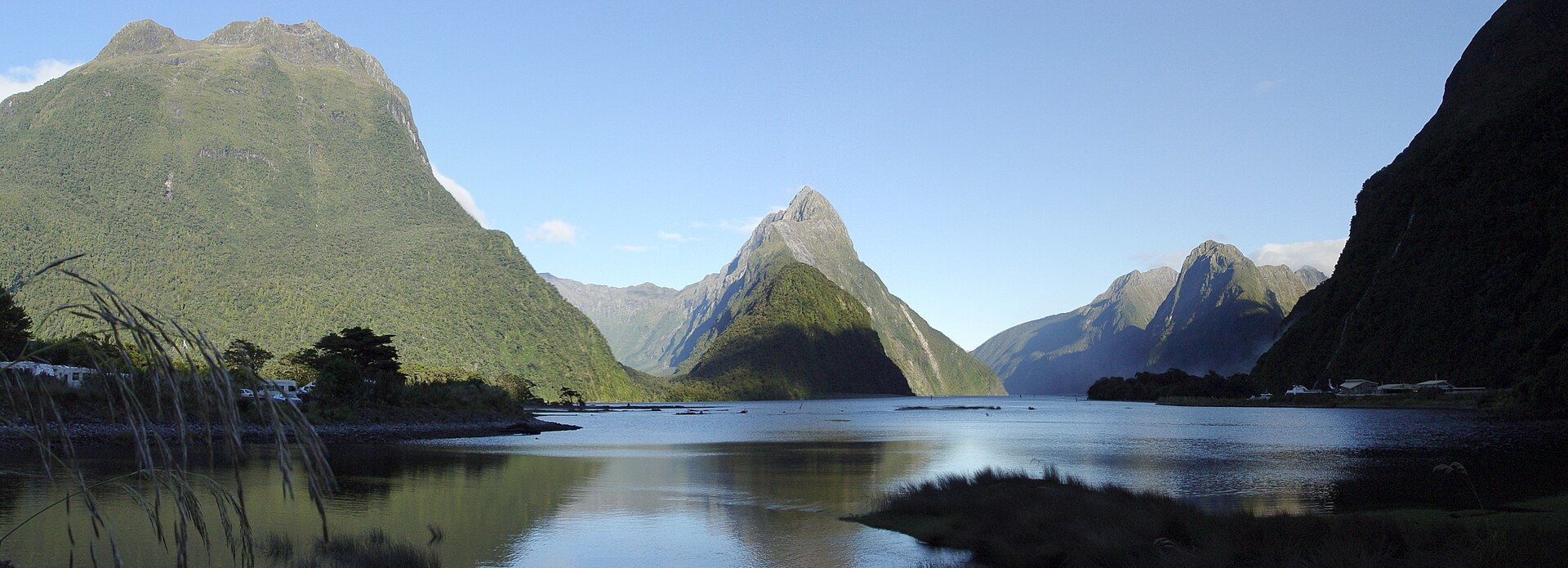
New Zealand's most famous fjord — sheer cliffs and the pyramid of Mitre Peak rising straight from dark water, laced with waterfalls fed by some of the highest rainfall on Earth, in the heart of Fiordland.
What makes it marvelous
Milford Sound (Piopiotahi) is a fjord carved by glaciers gouging deep below sea level, then flooded by the sea when the ice retreated. Rainfall here is extraordinary — several metres a year — so after rain the cliffs run with hundreds of temporary waterfalls, while permanent falls like Stirling and Bowen thunder year-round. The heavy freshwater runoff floats on the seawater, creating a dark surface layer that lets deep-sea species live in unusually shallow water. It lies within Te Wāhipounamu, a UNESCO World Heritage area.
Why visit
Cruising beneath 1,200-metre cliffs and mist-wreathed peaks, with waterfalls pouring off the walls and seals and dolphins in the water, is one of the world's great scenic experiences. Rain, far from spoiling it, brings the cliffs alive with cascades.
What to know before you go
🗓️ Best time
Year-round; it's a rainforest fjord, so rain is common and dramatic. Summer (December–February) is busiest; go early or late in the day to avoid peak boat traffic.
🧭 Getting there & access
From Te Anau or Queenstown on the South Island, via the scenic Milford Road (weather- and avalanche-dependent in winter). Boat cruises and kayaks run from the terminal.
Good to know
- Don't let rain deter you — it's when the waterfalls are at their best.
- Take an early or late cruise to avoid the midday crowds.
- Check road conditions in winter; the Milford Road can close for weather.
Plan your visit
Easy🧭 Getting there
From Queenstown or Te Anau, Fiordland
- Fly into Queenstown
- Road Queenstown → Te Anau — about 2h
- Te Anau → Milford on the Milford Road — roughly 2h–2h30 with stops, longer in bad weather
- Cruises leave from the Milford terminal at the head of the fiord
- Total travel
- Most of a day from Queenstown as a return trip
- Time at site
- A cruise runs about 1h45–2h; staying overnight at Te Anau or Milford improves the day enormously
- Access
- Open access by road, with cruises and kayak trips run by operators. The Milford Road is subject to avalanche closures through winter and spring and can shut at short notice, sometimes with convoy or chain requirements — check the transport agency road status on the morning you drive. The Milford Track is a Great Walk with a booking system that opens months ahead and sells out within minutes.
🎒 What to bring & consider
- Full waterproofs — Milford is one of the wettest inhabited places on earth, and rain is the normal condition rather than bad luck
- Sandfly repellent, which is genuinely not optional; the sandflies at the waterfront are ferocious and will ruin an otherwise fine day
- Warm layers, because the fiord is cold and the boat decks are windy even in summer
- A full tank before Te Anau — there is no fuel anywhere on the Milford Road
- Your own food; options at the terminal are minimal
👁️ What to expect
- Crowds
- Cruises cluster around late morning when the Queenstown coaches arrive. Early and late sailings are noticeably quieter.
- Conditions
- A long winding mountain drive through a one-lane tunnel, then a boat. Physically easy throughout.
- Facilities
- A cruise terminal with toilets and a cafe. Almost nothing else along the road.
- The view
- The fiord is arguably better in rain, when hundreds of temporary waterfalls appear down the cliffs — the sunny postcard is both rarer and, to many people, the lesser version. Mitre Peak clears more often in the morning.
Times and requirements are approximate and change with season, weather, and local rules — confirm permits, fares, and schedules with operators before you travel.
Natural riches of the area
- A glacier-carved fjord flooded by the sea
- Extreme rainfall feeding hundreds of waterfalls
- Unusual marine life (deep-sea species in shallow water)
- Temperate rainforest, seals, dolphins, and penguins
Local food
- Crayfish (rock lobster)
- Prized from the cold Fiordland waters.
- Green-lipped mussels
- A famous New Zealand shellfish, steamed or grilled.
- Lamb
- New Zealand's renowned grass-fed lamb.
Milford Sound is a fjord that wears its weather well. Glaciers carved this arm of the sea deep below the surface, and when they melted the ocean flooded in, leaving sheer walls rising over a kilometre straight from dark water, crowned by the pyramid of Mitre Peak. It sits in one of the wettest places on the planet, and that is its gift: after rain the cliffs stream with hundreds of temporary waterfalls, joining permanent giants like Stirling and Bowen.
The rain does something odd underwater, too. So much freshwater pours in that it floats as a dark tea-stained layer over the seawater, cutting the light and letting deep-sea creatures live in unusually shallow water. Cruise beneath the cliffs with seals hauled out on the rocks and dolphins in the wake, and you’ll understand why Milford, in the heart of UNESCO-listed Fiordland, is New Zealand’s most beloved natural sight — best of all in the rain.
Milford Sound: common questions
How do you get to Milford Sound?
From Queenstown or Te Anau, Fiordland: Fly into Queenstown; Road Queenstown → Te Anau — about 2h; Te Anau → Milford on the Milford Road — roughly 2h–2h30 with stops, longer in bad weather; Cruises leave from the Milford terminal at the head of the fiord. Allow Most of a day from Queenstown as a return trip.
When is the best time to visit Milford Sound?
Year-round; it's a rainforest fjord, so rain is common and dramatic. Summer (December–February) is busiest; go early or late in the day to avoid peak boat traffic.
How long should you spend at Milford Sound?
A cruise runs about 1h45–2h; staying overnight at Te Anau or Milford improves the day enormously. Most of a day from Queenstown as a return trip of travel from Queenstown or Te Anau, Fiordland.
What should you bring to Milford Sound?
Full waterproofs — Milford is one of the wettest inhabited places on earth, and rain is the normal condition rather than bad luck Sandfly repellent, which is genuinely not optional; the sandflies at the waterfront are ferocious and will ruin an otherwise fine day Warm layers, because the fiord is cold and the boat decks are windy even in summer A full tank before Te Anau — there is no fuel anywhere on the Milford Road Your own food; options at the terminal are minimal
Do you need a permit or guide for Milford Sound?
Open access by road, with cruises and kayak trips run by operators. The Milford Road is subject to avalanche closures through winter and spring and can shut at short notice, sometimes with convoy or chain requirements — check the transport agency road status on the morning you drive. The Milford Track is a Great Walk with a booking system that opens months ahead and sells out within minutes.
Is Milford Sound crowded, and what are conditions like?
Cruises cluster around late morning when the Queenstown coaches arrive. Early and late sailings are noticeably quieter. A long winding mountain drive through a one-lane tunnel, then a boat. Physically easy throughout. Facilities: a cruise terminal with toilets and a cafe. Almost nothing else along the road.
Added
More wonders to explore